A large Lego® set can take days without being especially difficult. Repeated walls demand patience, while one misplaced pin can disable a compact Technic gearbox. This ranking therefore differs from our list of the largest Lego sets.
Our top 15 compares the actual demands of the build. Retired sets remain eligible because this is an all-time ranking, but every entry needs a specific challenge beyond its size or 18+ label.
How we score build difficulty
Each set scores 1 to 5 in six categories: build time 20%, repetition 15%, mechanical complexity 25%, alignment precision 20%, instruction complexity 10% and fragility during construction 10%. We convert the weighted result to 10 points. This is an editorial comparison, not an official Lego rating.
Factor ratings use half-point steps where needed. Tied totals are ordered by build time, then mechanics, precision, repetition, instructions and fragility. The table publishes every input, so the overall scores can be reproduced from the weights above.
Build time measures concentration and endurance, not only pieces. Repetition covers near-identical modules; mechanical complexity covers gearboxes, motors, cables and linked functions. Precision measures alignment, instruction complexity the difficulty of finding or reversing errors, and fragility the care unfinished sections require.
Build times vary with experience, sorting and breaks. We start with Brickfact’s existing estimate for one person building at a steady pace, roughly 350 to 450 pieces per hour, then widen or shift a range for the model’s actual construction flow and the realistic pace imposed by its mechanisms or repetition. These are practical editorial ranges, not promises: sorting, mistakes, Technic experience, speed builds and group builds can change the result sharply. A longer build is not automatically harder.
Our assessment also considers how repetition, troubleshooting and fragile assemblies affect the experience across a long build. A model can be difficult because concentration drops during similar modules, because one hidden axle causes problems much later, or because a finished mechanism still needs careful tuning. Those practical differences matter more than piece count alone. We verify product details and scoring inputs separately.
The hardest Lego® sets at a glance
| Rank | Set | Pieces | Time | Repeat | Mechanics | Precision | Instructions | Fragility | Overall | Estimated build time |
|---|---|---|---|---|---|---|---|---|---|---|
| 1 | 42146 Liebherr Crawler Crane LR 13000 | 2,883 | 5 | 3 | 5 | 5 | 5 | 4 | 9.2/10 | 8–12 hours |
| 2 | 42143 Ferrari Daytona SP3 | 3,778 | 4 | 3 | 5 | 5 | 5 | 3 | 8.6/10 | 10–20 hours |
| 3 | 21323 Grand Piano | 3,662 | 4 | 5 | 5 | 4 | 4 | 3 | 8.6/10 | 7–11 hours |
| 4 | 21327 Typewriter | 2,079 | 3 | 4 | 5 | 5 | 4 | 3 | 8.3/10 | 5–10 hours |
| 5 | 42131 Cat D11 Bulldozer | 3,854 | 4 | 3 | 5 | 4 | 4 | 3 | 8.0/10 | 8–11 hours |
| 6 | 42130 BMW M 1000 RR | 1,920 | 3 | 3 | 5 | 5 | 4 | 3 | 8.0/10 | 5–6 hours |
| 7 | 42159 Yamaha MT-10 SP | 1,478 | 3 | 3 | 5 | 4.5 | 4 | 4 | 8.0/10 | 3.5–5 hours |
| 8 | 42115 Lamborghini Sián FKP 37 | 3,696 | 4 | 3 | 5 | 3.5 | 4 | 3 | 7.8/10 | 10–15 hours |
| 9 | 10307 Eiffel Tower | 10,001 | 4 | 5 | 2 | 5 | 4 | 4 | 7.7/10 | 13–30 hours |
| 10 | 10303 Loop Coaster | 3,756 | 4.5 | 5 | 3 | 3.5 | 3 | 4 | 7.6/10 | 6.5–11 hours |
| 11 | 75313 AT-AT | 6,785 | 4 | 3 | 3 | 5 | 4 | 4 | 7.6/10 | 15–21 hours |
| 12 | 75192 Millennium Falcon | 7,541 | 4 | 3 | 3 | 4 | 4 | 5 | 7.4/10 | 20–30 hours |
| 13 | 10294 Titanic | 9,090 | 5 | 5 | 2 | 4 | 3 | 3 | 7.3/10 | 25–35 hours |
| 14 | 10316 Rivendell | 6,167 | 4 | 4 | 2 | 5 | 3 | 4 | 7.2/10 | 14–20 hours |
| 15 | 75367 Venator-Class Republic Attack Cruiser | 5,374 | 4 | 3 | 3 | 4 | 3 | 2.5 | 6.7/10 | 12–17 hours |
1. Lego® Technic 42146 Liebherr Crawler Crane LR 13000
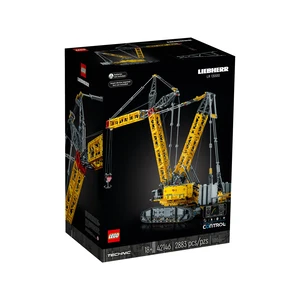
- Number of pieces: 2,883
- Difficulty score: 9.2/10
- Main challenge: Motors and cable routing
The Liebherr wins without having the most pieces. Its dense Technic base contains two hubs and six motors, followed by long boom sections, strings and pulleys. The build is spread across two instruction books with almost 600 pages but only five numbered stages. Incorrect cable routing or one binding gear is difficult to fix after completion.
The long lattice boom is repetitive, but the decisive difficulty is keeping each powered path free while the model becomes heavier and harder to turn on the table. Test the functions after each major stage. Switching between drivetrain, electronics, boom construction and rigging also gives the project more variety than its size suggests. The challenge comes from several working systems, not one endless repeated task.
2. Lego® Technic 42143 Ferrari Daytona SP3
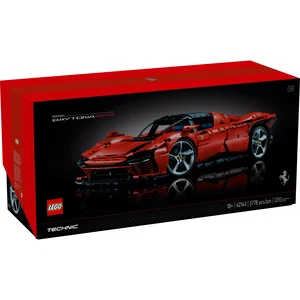
- Number of pieces: 3,778
- Difficulty score: 8.6/10
- Main challenge: Eight-speed gearbox
The Ferrari's eight-speed sequential gearbox connects paddle shifters to a V12 engine. Steering, suspension and doors add further linked systems. Since later bodywork hides the mechanism, test every gear during construction rather than after completion.
Colour-coded axles help, yet several similar connectors sit close together. Working slowly through the chassis matters more here than sorting a very large pile of pieces.
3. Lego® Ideas 21323 Grand Piano
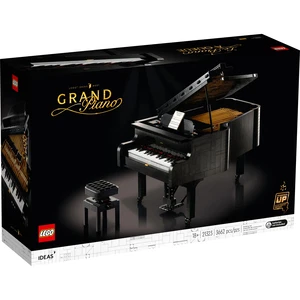
- Number of pieces: 3,662
- Difficulty score: 8.6/10
- Main challenge: Repeated key mechanisms
The Grand Piano combines Technic work with repetition. Every key belongs to closely spaced hammer mechanisms, so the same precise movement must work across the keyboard. Motor, Powered Up components and moving keys leave little room for loose connections. Test each section before closing the case.
The repeated parts also look alike on the work surface. Careful sorting and checking the movement of every key keeps one small omission from affecting the finished keyboard.
4. Lego® Ideas 21327 Typewriter
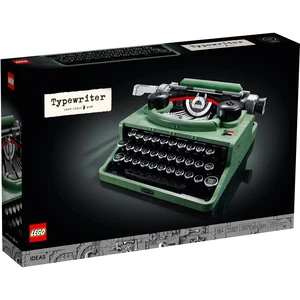
- Number of pieces: 2,079
- Difficulty score: 8.3/10
- Main challenge: Linked carriage mechanism
Each key should raise the central typebar and move the carriage through a compact network of axles, levers and repeated assemblies. The simple exterior hides a mechanism that demands precise pin placement and regular tests. A buried error can leave the finished typewriter inoperable.
The return motion is just as important as the key press. Any extra friction can leave the carriage or typebar out of position for the next stroke.
Prices, specifications and market history are on the 21327 Typewriter set page.
5. Lego® Technic 42131 App-Controlled Cat D11 Bulldozer
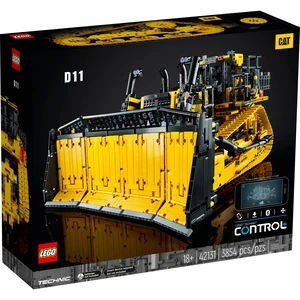
- Number of pieces: 3,854
- Difficulty score: 8.0/10
- Main challenge: Four motors and drivetrain
Four motors and a hub control the Cat D11's tracks, blade, ripper and ladder. Axles must turn freely, cables need clean routes and both track sides must behave consistently. Repeated tread links add endurance after the mechanical core.
Its modular stages make progress easy to see, but they also hide earlier drive components once the body closes around them. Function checks prevent late disassembly. Treat calibration as the final construction step rather than a separate app task. Before closing the body, verify that each motor is connected and test both track sides independently. If calibration later fails, these checks narrow the search before the body has to be reopened.
6. Lego® Technic 42130 BMW M 1000 RR
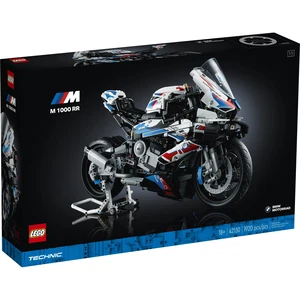
- Number of pieces: 1,920
- Difficulty score: 8.0/10
- Main challenge: Compact motorcycle mechanics
This BMW packs a three-speed gearbox, steering, suspension and a four-piston engine into a narrow 1:5-scale frame. Mirrored fairing panels must meet cleanly around the dense core, making later corrections awkward.
Motorcycles also have less bodywork to disguise uneven geometry. A small alignment error in the fork, frame or rear wheel remains visible from almost every angle. The finishing workload matters too: numerous stickers turn clean placement into another precision task. The mechanical build remains engaging, but builders who dislike sticker alignment may find the final stage less rewarding than the gearbox.
7. Lego® Technic 42159 Yamaha MT-10 SP
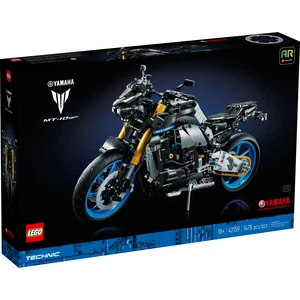
- Number of pieces: 1,478
- Difficulty score: 8.0/10
- Main challenge: Three-speed gearbox
The ranking's smallest set demands precision. Its gearbox uses a shift drum, fork, ring and gear wheel, while engine, steering and suspension share one tight frame. A misplaced connector can affect several functions.
Builders must read axle lengths and connector orientations carefully. The finished motorcycle offers little access to the gearbox, so each gear should be checked before the next frame layer. Colour coding helps prevent orientation errors around the shift mechanism, although the same bright guidance remains visible inside the finished frame. That is a useful assembly aid with a real display trade-off.
8. Lego® Technic 42115 Lamborghini Sián FKP 37

- Number of pieces: 3,696
- Difficulty score: 7.8/10
- Main challenge: Gearbox and suspension
The Lamborghini combines an eight-speed sequential gearbox with a V12 engine, steering and suspension. Most of the challenge sits inside the chassis before the green panels appear, so check axle orientation and gear movement after every major stage.
Later bodywork depends on a straight chassis. If the suspension or frame is twisted, the final panel gaps reveal the problem even when the drivetrain still turns.
9. Lego® Icons 10307 Eiffel Tower
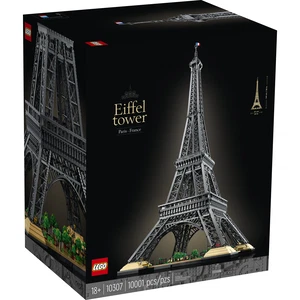
- Number of pieces: 10,001
- Difficulty score: 7.7/10
- Main challenge: Repetition and alignment
The Eiffel Tower is our hardest repetitive build. Four legs, long rows of latticework, railings and supports create many similar assemblies, where a small counting error can break the symmetry later. The upper sections also have to sit straight on a structure 149 cm tall. Across 74 numbered bags, the repeated lattice sections make this a methodical project estimated at 13 to 30 hours. The instructions are systematic; maintaining concentration is the difficult part.
In practice, the repeated structure can feel monotonous even when the finished model is impressive. The lower lattice stages combine the greatest density of similar braces with the need to keep four sides consistent. Shorter sessions and deliberate checks at the end of each side are more useful here than simply building faster.
10. Lego® Icons 10303 Loop Coaster
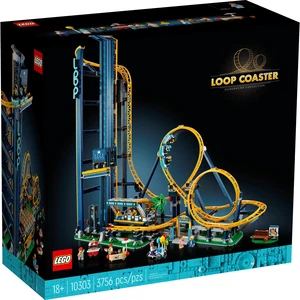
- Number of pieces: 3,756
- Difficulty score: 7.6/10
- Main challenge: Lift and track alignment
The Loop Coaster combines a gravity-driven lift, counterweight, brake and two loops. Its 3,756 pieces and 255 chain links put the estimated build time at 6.5 to 11 hours. The finished track only runs reliably when lift, modules and car path align without extra friction. If the lift stops at the wrong height or the track is out of line, cars can stall or overshoot. A finished-looking model may still need tuning.
Chain tension is only one part of that tuning. Tiny gaps between rail sections, a slightly distorted track or dust on the running surfaces can change the car's speed enough to expose another weak point. Test complete cycles before decorating the surroundings, and expect occasional maintenance if the model remains on display and in use.
11. Lego® Star Wars 75313 AT-AT
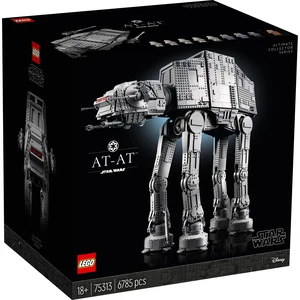
- Number of pieces: 6,785
- Difficulty score: 7.6/10
- Main challenge: Leg alignment
The UCS AT-AT balances a heavy body on four adjustable legs. Build them consistently and position them with the supplied tool while handling large side panels. Load-bearing joints, repetition and vulnerable panels make handling part of the challenge.
12. Lego® Star Wars 75192 Millennium Falcon
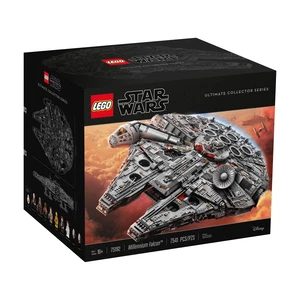
- Number of pieces: 7,541
- Difficulty score: 7.4/10
- Main challenge: Frame and angled panels
The Millennium Falcon grows from a large Technic frame through irregular corridors and removable hull panels. Builders repeatedly change orientation and attach angled sections. Each bag is manageable, but moving the unfinished model and aligning upper panels require care.
Many grey surface elements are similar without being interchangeable. Sorting them by shape, not only colour, reduces the chance of carrying a small mistake into the next hull section. The alternation between frame, interior rooms and angled hull panels can keep the project more varied than the grey exterior suggests. Its size is demanding but need not make every bag equally punishing.
13. Lego® Icons 10294 Titanic
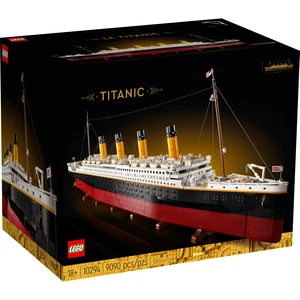
- Number of pieces: 9,090
- Difficulty score: 7.3/10
- Main challenge: Build endurance
Titanic is the clearest example of long not always meaning technically hard. Our practical estimate is 25 to 35 hours for a steady solo build, with the ship divided into six manageable sections. Repeated windows, deck fittings and hull patterns demand concentration, while the three final display segments must join cleanly. The mechanisms are limited, so its difficulty comes mainly from endurance and alignment.
Prices, specifications and market history are on the 10294 Titanic set page.
14. Lego® Icons 10316 The Lord of the Rings: Rivendell
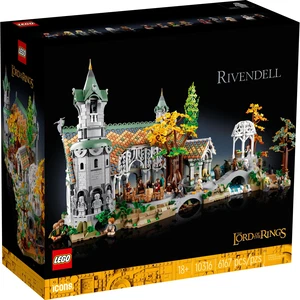
- Number of pieces: 6,167
- Difficulty score: 7.2/10
- Main challenge: Patterned roof
Rivendell's roof uses a dense diagonal pattern that needs consistent spacing across a large surface. Trees, railings and thin architectural details make unfinished sections easy to knock, and the three modules have to meet as one landscape. The instructions are easier to diagnose than a gearbox, but the model asks for a steady hand over many decorative steps.
Rivendell's varied techniques and well-paced sections make the build more rewarding than exhausting. The model moves between architecture, terrain, foliage, furniture and character details before one method becomes tiring. Even the elaborate roof can be easier than its appearance suggests once the diagonal pattern settles into a repeatable rhythm. Its practical challenge is protecting completed details while joining and handling the three modules.
15. Lego® Star Wars 75367 Venator-Class Republic Attack Cruiser
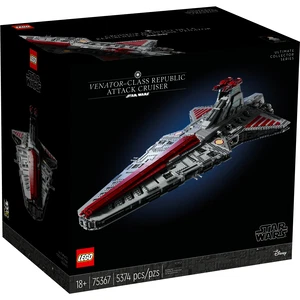
- Number of pieces: 5,374
- Difficulty score: 6.7/10
- Main challenge: Hull alignment
The Venator-Class Republic Attack Cruiser uses a long internal frame beneath red and grey hull panels that must meet along a narrow centre line. Large unfinished sections need support when moved. The sequence is lengthy rather than mechanically punishing, which places the Venator behind the more error-sensitive builds above.
Which sets win for overall difficulty, Technic, repetition and precision?
- Hardest overall: 42146 Liebherr Crawler Crane LR 13000, because six motors, two hubs and several cable-driven functions all need to work together.
- Hardest Technic set: 42146 Liebherr Crawler Crane LR 13000. The 42143 Ferrari Daytona SP3 is the strongest alternative for builders who specifically want a gearbox-focused challenge.
- Hardest repetitive build: 10307 Eiffel Tower, with four legs and extensive latticework that must stay consistent.
- Hardest set for precision: 21327 Typewriter, because accurate key, typebar and carriage movement depends on the hidden mechanism.
Conclusion: largest does not mean hardest
The Titanic and Eiffel Tower take longer than many Technic models, but their challenge is mostly endurance, repetition and alignment. The Liebherr, Ferrari, Grand Piano and Typewriter rank higher because a small internal mistake can stop several functions and remain hidden until much later.
Choose the challenge you enjoy: Technic or functional Ideas models for careful mechanics; the Eiffel Tower, Titanic or a UCS Star Wars set for a long project. Find more display models among the best Lego sets of all time.
Want to buy Lego sets at a bargain price? In the Brickfact price comparison you can choose from a variety of suppliers and save money. The Brickfact app can notify you as soon as a new Lego deal is available. The Brickfact app is free for iOS and Android.