Lego® Architecture has offered brick-built skylines and landmarks since 2008. The line is familiar to builders who want compact, display-oriented interpretations of real buildings.
If you want a different subject, scale or building format, the broader Lego alternatives market includes modular streets, illuminated interiors and compact landmarks. The three current picks below represent those different uses; they are not a universal brand ranking.
Three current Lego® Architecture alternatives
Brickfact assessment: a good architecture alternative needs more than a high part count. We favor a clearly identified design, a stable display format and a product page that shows what is included. Lighting and micro-bricks can add detail, but they also change the build experience and compatibility.
1. PANTASY Architecture Studio
This modern modular office is co-designed with the Korean creator Ohsojang. The three-storey model combines workspaces with an LED-lit street scene and includes five figures, making it a display building rather than a small skyline souvenir.
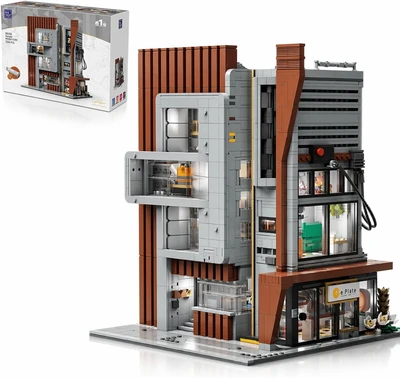
- Choose it for a contemporary workplace facade and furnished interior rather than a famous landmark.
- View here
2. Lumibricks Antique Store
Lumibricks builds the lighting into this three-floor corner shop. Its 2,847 pieces create a detailed storefront and upper floors, while the light system becomes part of the construction sequence instead of an accessory added at the end.
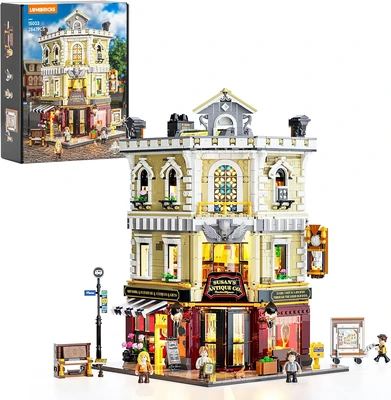
- Choose it when a lit street scene matters more than matching a real-world monument.
- View here
3. Wange Elizabeth Tower Big Ben
Wange turns the Elizabeth Tower and the adjoining base into a compact landmark display. The shape is immediately recognizable and the narrow footprint is easier to place than a full modular building.
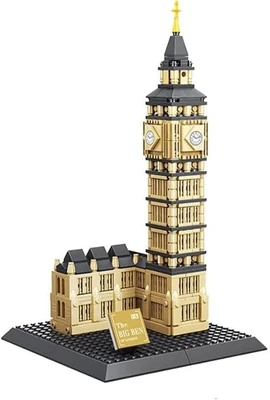
- Choose it for a traditional landmark at a smaller display scale.
- View here
Why choose an Architecture alternative?
Lego Architecture concentrates on licensed skylines, landmarks and carefully controlled presentation. Alternative manufacturers cover a wider mix of modular streets, lit interiors and large display buildings. That wider choice is useful, but it makes the exact product more important than the brand name. A company can sell standard-size bricks, mini-bricks and illuminated models under neighboring listings, and those formats do not serve the same collection.
How the alternatives differ from Lego Architecture
Start with the finished size and brick format. A tall tower may use little shelf depth, while a three-storey corner building needs a wider base. Standard-size bricks are the sensible choice when you want to combine a model with an existing city. Mini- and micro-bricks can create finer facades in less space, but they are not a source of ordinary Lego-compatible parts.
Lighting is another practical dividing line. An integrated kit can make a facade more convincing at night, yet cables and light boards add steps that do not appear in a normal Architecture set. Check whether the lights, battery box and power cable are included in the exact variation. For any large building, numbered bags, replacement-part support and clear correction sheets matter more than promotional claims about the total number of pieces.
The three current picks at a glance
| Model | Building type | Standout feature | Main trade-off |
|---|---|---|---|
| PANTASY Architecture Studio | Furnished modular office | Contemporary interior and five figures | Needs more shelf width than a narrow landmark |
| Lumibricks Antique Store | Three-floor corner shop | Integrated lighting and a detailed street facade | Wiring adds work during the build |
| Wange Elizabeth Tower | Compact landmark | Recognizable silhouette on a narrow base | Less interior play and fewer modular-city options |
This table is a starting point rather than a quality ranking. The three models answer different versions of the same search: a modern building with rooms, a lit street scene, or a familiar monument. The most useful comparison is therefore not which box contains the most pieces, but which finished object fits the collection.
What the build experience is likely to emphasize
PANTASY's studio has the broadest storytelling potential of these three choices. Offices, desks, figures and multiple floors create small scenes inside the shell. That also means the build alternates between structural walls, furniture and facade details. It suits someone who enjoys seeing an interior develop, not only stacking a recognizable exterior.
The Lumibricks shop puts more attention on atmosphere. Lighting can make a corner building much more effective on a display shelf, especially when it sits beside other modular facades. The trade-off is planning: wires need to remain accessible and should not be pinched between bricks. Before dismantling a lit model, photograph the cable route so it can be rebuilt without guesswork.
Wange's Elizabeth Tower is the most conventional Architecture-style choice in this shortlist. The repeated facade and tower geometry make the landmark recognizable, while the slim footprint keeps it easier to display. Repetition can be relaxing for one builder and monotonous for another, so the subject matters more here than the number of different rooms or functions.
Compatibility, lighting and design identity
Compatibility should be split into three questions. First, do the studs and basic dimensions connect with standard construction bricks? Second, do colors, doors and decorative parts match an existing city closely enough for the intended scene? Third, does the finished building share the same scale? A product can connect physically while looking oversized beside a Lego Architecture skyline or undersized beside a modular street.
Lighting creates a separate ecosystem. Integrated LEDs do not imply compatibility with Lego light kits, USB hubs or battery boxes. Use only the voltage and connection method specified for the exact model, and keep a route to the power switch after the building is complete.
We also favor products whose design identity is clear. An original collaboration, a named in-house model or a licensed building gives buyers a better chance of finding instructions and replacement support later. A generic listing with no identifiable designer may still contain usable bricks, but it is a weaker editorial recommendation for a display model whose design is the main reason to buy it.
Which alternative fits which buyer?
- Choose PANTASY if furnished rooms and a contemporary modular facade are more important than recreating a famous landmark.
- Choose Lumibricks if the finished night-time display is the priority and you are comfortable routing light cables during construction.
- Choose Wange if you want a recognizable landmark with a relatively narrow footprint.
- Stay with Lego Architecture if consistent scale, official subject licensing and integration with an existing Architecture collection matter more than a lower price or integrated lighting.
Frequently asked questions
Are these sets automatically compatible with Lego bricks?
Do not apply one answer to every product from a brand. Confirm the brick format on the exact listing. Even when basic studs connect, scale, colors and special elements can differ enough to limit useful mixing.
Are more pieces always better for an architecture model?
No. Micro-bricks can produce a high count in a compact model, while large wall elements can lower the count without reducing the finished size. Dimensions, brick scale and the kind of detail are more informative than piece count alone.
Is an illuminated building harder to assemble?
Usually it adds a second task rather than simply increasing difficulty. The brick structure may be straightforward, but cables must be routed in the correct order and kept away from tight connections. Read the lighting steps before closing each floor.
What should I check when the model is a gift?
Check age guidance, finished dimensions, brick format and whether lighting requires separate batteries or a USB power source. For an adult recipient, subject and available display space are often more important than the advertised age range.
Checklist before buying
- Confirm the brick scale. Standard, mini and micro-bricks are different buying decisions.
- Measure the finished model. Compare width, depth and height with the shelf where it will stand.
- Check the exact electronics. Product photos can show lighting that is optional on another variation.
- Look for a clear design identity. We prefer original or licensed products whose maker and model can be identified.
- Start smaller with an unfamiliar brand. A moderate first project reveals clutch, color consistency and instruction quality before you commit to a very large building.
Conclusion
PANTASY is the strongest fit here for a contemporary furnished building, Lumibricks for integrated lighting and Wange for a compact landmark. None is automatically better than Lego Architecture in every respect. The right choice depends on brick scale, available space and whether you want a realistic monument, a modular street or a lighting project.
The free Brickfact app compares listed Lego offers and can send a push notification when a tracked set drops in price. It is available for iOS and Android.