CaDA is no longer best described as a low-cost copy of familiar engineering sets. The Chinese brand develops its own vehicles, works with independent designers and sells officially licensed models. LEGO® still offers the broader overall system, including more themes, a well-established replacement-parts service and electronics that work across multiple product lines.
The better choice depends less on the logo and more on what you want to build. This CaDA-vs.-LEGO comparison examines clutch, Technic-style elements, instructions, decoration, motors, subject matter and value. If you want to explore beyond these two brands, see our guides to the best LEGO alternatives and LEGO Technic alternatives.
Current CaDA recommendation on Amazon.com
The following listing was orderable when checked. Stock, seller eligibility and delivery to a particular destination can change, so verify the current information on the product page before purchasing.
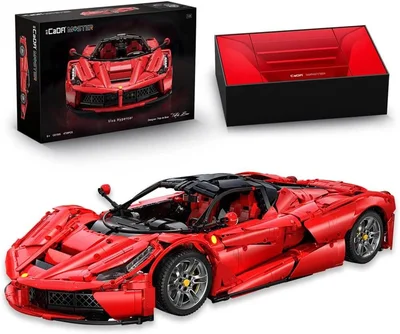
CaDA Master C61505W Viva Hypercar
The C61505W is a 4,739-piece 1:8 supercar for experienced builders. Its size and dense mechanical construction make it a better example of CaDA's Master range than a small introductory model. Choose it for a long, technical build and a substantial display car rather than a quick play set. The Amazon.com listing uses the name “LaFer Supercar”; the model number C61505W identifies the same set shown here. Check the listed age range and seller details before ordering.
- Piece count: 4,739
- Scale: 1:8
- Check here on Amazon
CaDA vs. LEGO® at a glance
| Area | LEGO® | CaDA |
|---|---|---|
| Standard bricks | Very consistent clutch | Can be combined with LEGO®; consistency varies by set |
| Engineering elements | Uniform pins, axles and connectors | Many compatible elements; fit can vary more |
| Instructions | Usually easy to follow, often available digitally | Generally clear, although dense models can make access tight |
| Decoration | A set-dependent mix of prints and stickers | Often uses many printed elements, depending on the model |
| Motorization | Broad Powered Up and Control+ ecosystem | Motors and conventional remotes on selected models |
| Range | Numerous themes and licenses for most age groups | Strong focus on vehicles, engineering and display models |
| Value | Often costs more, especially with large licenses | Frequently provides more pieces or functions for the budget |
These are typical tendencies, not promises that apply to every box. Older, simpler CaDA products and recent Master releases can feel very different. Production runs and individual element types matter as well. Brickfact assessment: Check reviews and specifications for the exact set rather than treating either brand as uniformly superior.
Brick quality, clutch and compatibility
Consistency is one of LEGO®'s clearest strengths. Two examples of the same brick or pin normally behave much alike, which becomes important in gearboxes, steering assemblies and structures that move under load. Standard bricks are durable, while the extensive parts catalogue and downloadable instruction library make repairs, replacements and later modifications comparatively straightforward.
CaDA's standard studded bricks can generally be connected to comparable LEGO® bricks. On newer CaDA cars, surfaces, printing and the finished bodywork can be convincing. The fit of Technic-style pins and connectors, however, is not equally predictable in every model. One connector may be tighter than expected while another has more play. A firmer connection is not automatically better: it can make a large model tiring to dismantle or increase friction in a mechanism.
Colours, printed parts and instructions
CaDA uses black or visually subdued engineering pins in some models and often includes a generous number of printed details. That can give a completed vehicle a cleaner colour scheme and reduce the time spent aligning stickers. This varies by product, so the presence of prints should be checked in the listing or inventory. LEGO® more often uses colour-coded internal pieces to help builders identify orientation and progress through a complex assembly.
Large CaDA cars sometimes combine several connections in a single step or ask the builder to reach into an already crowded section. The diagrams may still be understandable, but access can be awkward for larger hands. LEGO® generally breaks complicated subassemblies into more incremental steps and offers digital instructions for many sets. Isolated drawing errors can occur with either manufacturer and should not be turned into a blanket judgment about every instruction booklet.
Motors, remote controls and apps
LEGO® connects motors, hubs and sensors through Powered Up or Control+. A car can move, of course, but the bigger advantage is that the electronics form a reusable system across several themes. The trade-off is cost: hubs and motors are expensive components and can raise the price of a motorized set substantially. From our guide to the best remote-controlled LEGO Technic sets, the 42160 Audi RS Q e-tron illustrates the approach with app control and independent suspension on all four wheels.
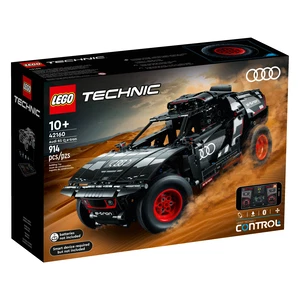
- Control+ remote control
- Independent suspension on all four wheels
- 914 pieces
Selected CaDA models include motors and a traditional handheld remote, while others are sold in static and motorized versions or accept an optional power pack. That can be attractive if the goal is one self-contained vehicle. Controls, motor output, battery arrangements and long-term expansion are less standardized than LEGO®'s ecosystem, however. Check exactly which components are included; a photograph of a moving model does not necessarily mean the base version contains electronics.
Themes, licenses and intended builders
LEGO® covers a very wide audience through City, Star Wars, Harry Potter, Icons, Technic, Duplo and many other lines. Preschool builders, families and adult collectors can all remain within one compatible catalogue. Licensed subjects are central to that range. The 75362 Ahsoka Tano's T-6 Jedi Shuttle, for example, combines a recognizable Star Wars craft with four minifigures and a play-oriented interior in a 601-piece set.
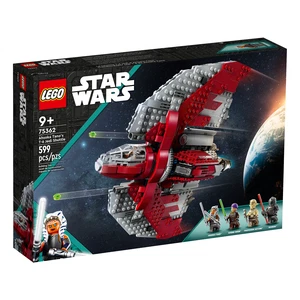
- Star Wars model with four minifigures
- 601 pieces
- Recommended for ages 9 and up
CaDA concentrates more heavily on cars, motorcycles, commercial vehicles and mechanical display pieces. Its Master line tends to suit experienced builders through large scales, gearboxes, suspension and tightly shaped bodywork. The catalogue also includes smaller licensed vehicles and buildings. The old claim that CaDA has no licenses is plainly out of date: officially licensed automotive and product models are part of its present range. For other direct brand comparisons, see LEGO vs. Mega Bloks and LEGO vs. Cobi.
Comparing price and value fairly
Price per piece is a weak shortcut for engineering sets. A large wheel, shaped body panel, motor, hub or licensed element costs more to produce than a tiny pin, yet each counts as one piece. Compare static with static and motorized with motorized, then consider finished dimensions, electronics, mechanical functions and whether the model is likely to be rebuilt. Discounts also change the result from week to week.
CaDA often offers more for a fixed budget when the priority is a large, detailed car with many functions. LEGO® can justify part of its premium through dependable replacements and a system whose parts and electronics can be reused across a collection. CaDA may offer better immediate value for one display model; LEGO® may make more sense for a collection that will be expanded, modified and shared over years. Neither conclusion applies automatically to every set.
CaDA or LEGO®: our verdict
LEGO® is the safer choice when highly consistent elements, a broad selection of themes, easy access to replacement parts and one connected electronics platform matter most. That complete ecosystem is difficult to beat for family building, regular rebuilding and collections that mix many subjects.
CaDA makes a strong case for technical vehicles, large display cars, extensive printing and a high function count for the budget. Strong Master models can look excellent beside established competitors. Clutch, dismantling effort and electronics should still be judged model by model. There is no universal winner: LEGO® leads as an integrated system, while CaDA can be the more appealing proposition for a particular mechanical vehicle.
FAQ about CaDA vs. LEGO®
What is CaDA?
CaDA is a building-block brand owned by the Chinese manufacturer Double Eagle. Its catalogue includes small vehicles, buildings, remote-controlled products and complex Master models.
Is CaDA compatible with LEGO®?
CaDA's standard bricks and many Technic-style elements are generally compatible with comparable LEGO® parts. Colours, clutch and certain specialized components can differ.
Are CaDA bricks as good as LEGO® bricks?
Recent CaDA sets can have good surfaces, crisp prints and impressive finished designs. LEGO® is usually more predictable in the consistency of bricks, pins and system elements across different sets.
Is CaDA cheaper than LEGO®?
CaDA often provides more pieces or mechanical functions for the money in large engineering sets. A fair comparison must account for motors, licensing, model size and the current retailer offer rather than relying only on price per piece.
Who is CaDA best for?
CaDA primarily suits older children, teenagers and adults interested in technical vehicles or display models. LEGO® offers the stronger selection for preschool children and buyers who want the widest possible range of themes.