LEGO and COBI both use studded building elements, but they serve different priorities. LEGO offers the broader play and licence ecosystem; COBI is a strong alternative for detailed, scale-focused vehicles, printed decoration and historical subjects.
COBI's range and the buying examples below are current as of 17 August 2026; product specifications and availability can change.
If you are comparing more brands, our guide to LEGO alternatives explains the wider market. Here the question is narrower: where do LEGO and COBI differ in theme selection, construction, figures, presentation and buying experience?
LEGO vs COBI at a glance
| Criterion | LEGO | COBI |
|---|---|---|
| Range | Very broad themes for children, families and adult builders | Focused range with unusual depth in vehicles and historical display models |
| Military subjects | Avoids realistic modern military vehicles as a general brand policy | Core category covering tanks, aircraft, ships and historical conflicts |
| Licences | Extensive entertainment, vehicle and lifestyle licences | Vehicle, museum and aviation licences, often tied to scale models |
| Compatibility | Reference system for LEGO elements and minifigures | Standard bricks generally connect, but figures and specialised geometry are not interchangeable in every detail |
| Prints and stickers | Varies by set; many products use both | Printed details are a recurring strength on current models; verify the exact set |
| Figures | Iconic minifigure format with a very large accessory ecosystem | Different proportions and articulation; useful for COBI scenes, not a direct minifigure substitute |
| Building style | Mix of play, functions, display and modular construction | Dense, scale-focused vehicle construction with shaped elements and fine surface detail |
| Instructions | Mature visual step sequence; experience varies with set size and age band | Clear illustrated steps suited to detailed model-building projects |
| Display | Strong across Icons, Technic, Architecture and licensed sets | Strong shelf impact from recognisable vehicles, dense shaping and stated scales |
| Best fit | Broad choice, play systems, minifigures, licences and long-term expansion | Detailed historical or military subjects, printed markings and scale-focused display |
COBI's clean printed decoration, generally firm clutch and polished shelf presence make it a compelling choice for detailed vehicles.
LEGO remains stronger for catalogue breadth, minifigure-led play and versatile rebuilding.
Fit and clutch can vary by part, model or batch, so both brands keep clear strengths without making every individual product equivalent.
Themes, licences and target audiences
LEGO covers a much wider set of uses: preschool building, role play, minifigure-led play, Technic mechanisms, modular buildings, botanical display pieces and major entertainment licences. That breadth also makes it easier to extend an existing collection with compatible figures, accessories and locations.
COBI's catalogue is smaller, yet unusually deep in aircraft, armour, ships and classic vehicles. Its current range includes World War I and II subjects, post-war armed-forces models and civilian cars.
Official catalogue pages also show licences connected with Boeing, Lockheed Martin, Northrop Grumman, Sikorsky, Jeep, Maserati, Citroën, Trabant and several museums. Availability and licensing can change, so the exact product page remains the authority for a purchase.
Military and historical models
This is the clearest difference. LEGO says it avoids realistic weapons and military vehicles that children could recognise from current conflicts, although fantasy weapons and historical context appear elsewhere in its range.
COBI deliberately offers tanks, artillery, aircraft and warships. A reader looking for a named Sherman, Bismarck or modern fighter will therefore find far more direct options from COBI.
Scale, display and play
COBI often states a scale on vehicle packaging or product pages. A defined scale helps collectors place related aircraft, ships or cars together, and specialised slopes can create a recognisable silhouette with fewer visible studs. The trade-off is that model-specific parts may be less useful for free building than a box of common bricks.
LEGO is less consistently scale-driven. Depending on the theme, designers prioritise characters, play space, working functions or an attractive display footprint. Large LEGO models can be strong display pieces without belonging to one shared collector scale, as our greatest LEGO sets overview demonstrates.
Four current COBI examples
The four products range from a compact civilian car to a large historical display model. Each link points to the exact Amazon.com listing verified as buyable on 17 August 2026. Stock can change.
COBI Trabant 601 Deluxe
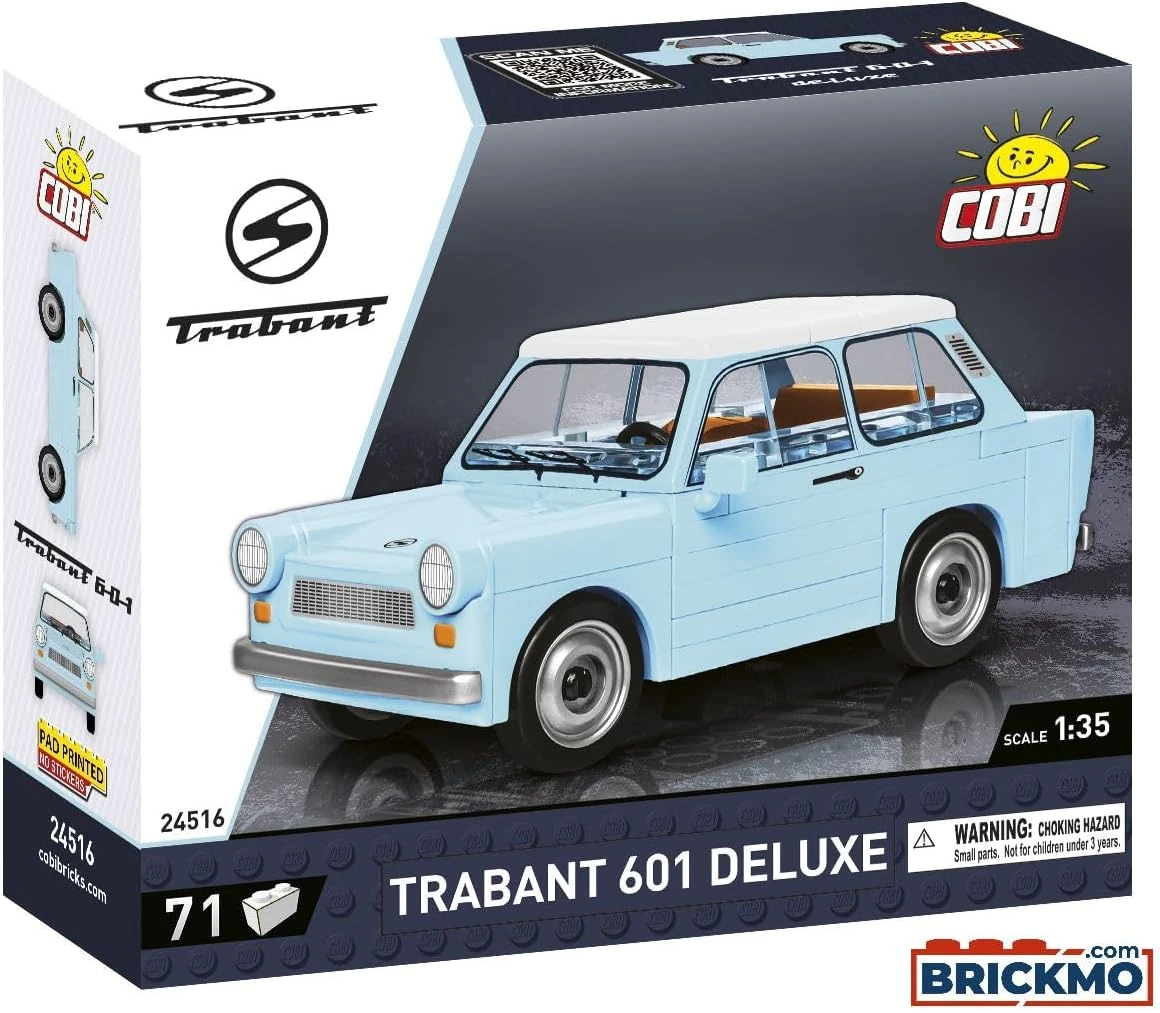
The retail image identifies this compact civilian car as set 24516 with 71 pieces at 1:35 scale. View here.
COBI Maserati MC20
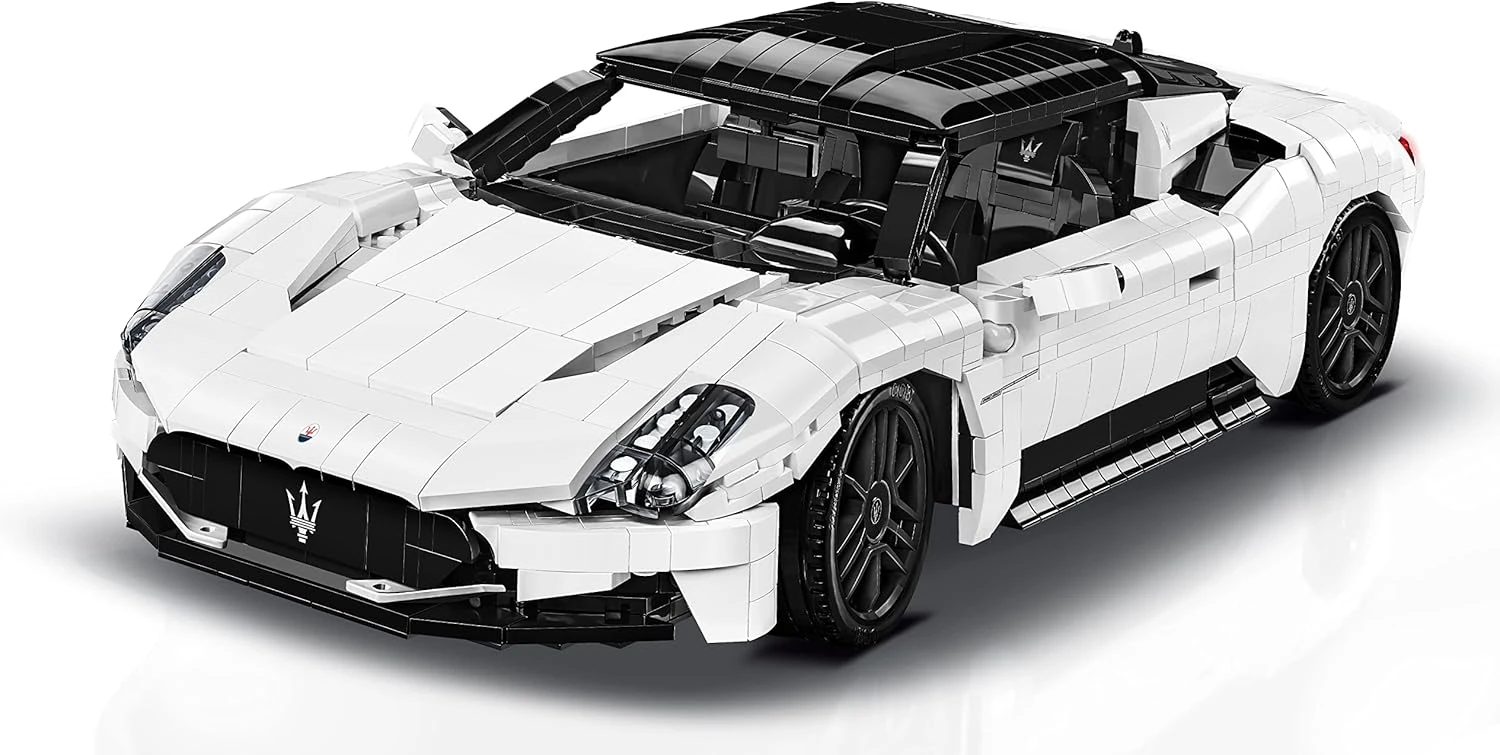
This licensed 1:12 Maserati is a 2,269-piece civilian display project with printed details. View here.
COBI Citroën 2CV Type A
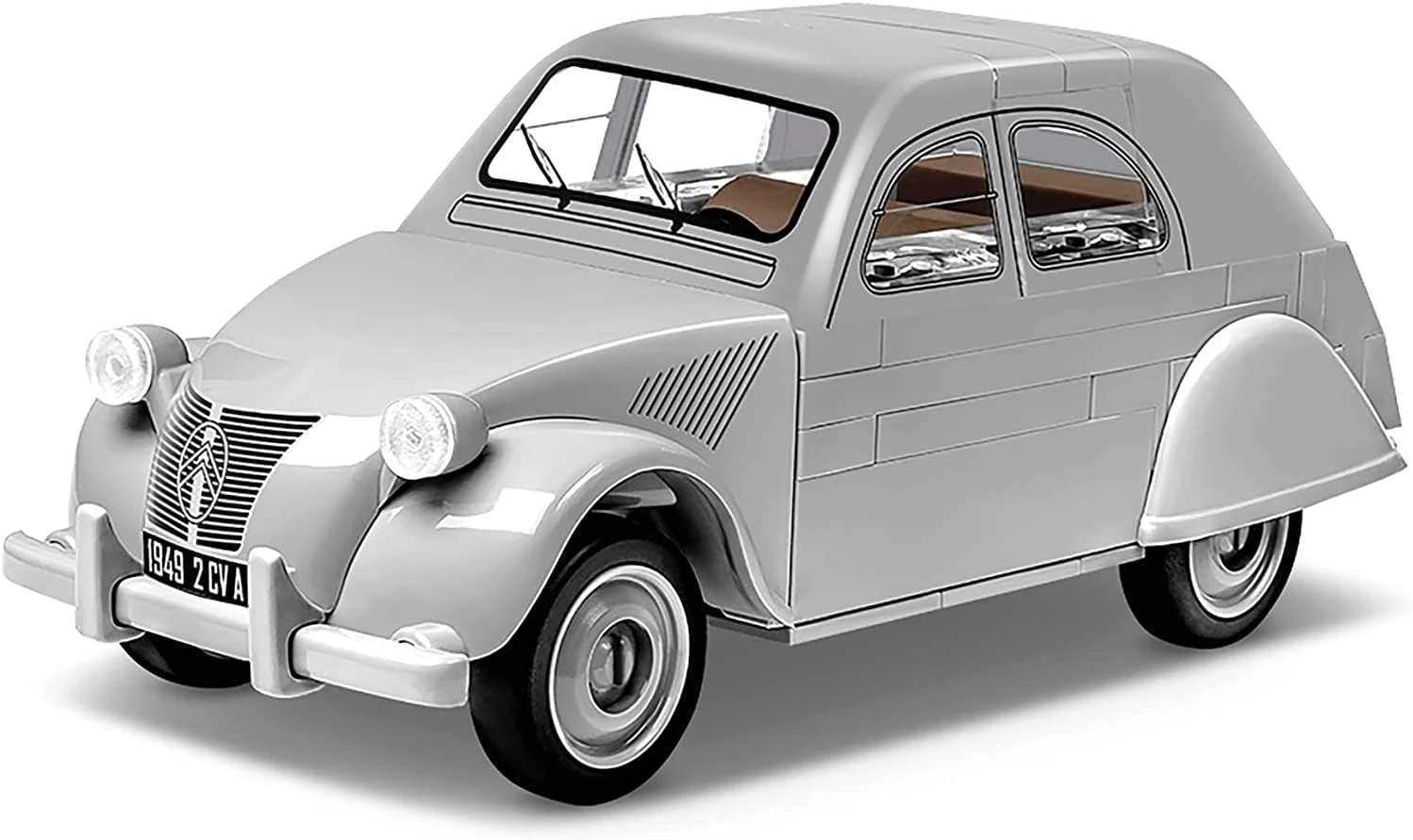
The 80-piece Citroën 2CV Type A is a compact 1:35 licensed car. View here.
COBI Battleship Bismarck
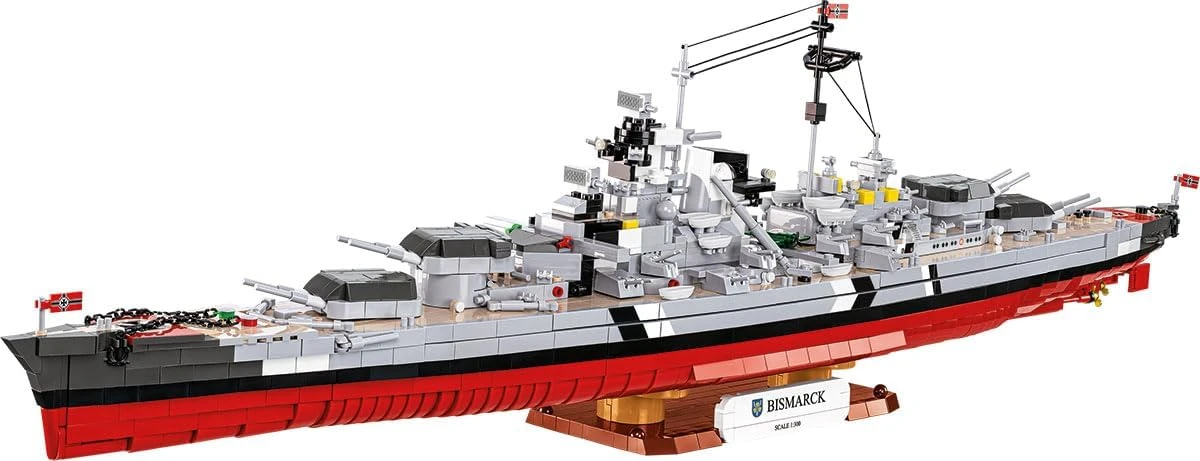
The listing identifies this as the 3,204-piece, 1:300 Bismarck with a display stand, not a smaller edition. View here.
Bricks, connections and compatibility
Standard COBI studs, plates and basic bricks can generally connect with standard LEGO elements. That is mechanical compatibility, not proof that every element, angle or figure interface is identical. COBI connections are often firm and precise, although fit can vary by part, model or batch; forcing a stressed connection is poor practice.
Prints, stickers and specialised parts
Many current COBI vehicle listings emphasise pad-printed details, but this is not a safe brand-wide promise. LEGO uses both prints and stickers. COBI also uses specialised hull, wing and bodywork elements more often in vehicle outlines; that improves fidelity but can reduce general-purpose reuse.
Figures
LEGO minifigures have a familiar compact form and a large accessory ecosystem; some of the most expensive LEGO minifigures are valued independently.
COBI figures have different proportions and articulation, so stud connection does not make them direct substitutes.
Instructions and building experience
Both companies use illustrated, step-by-step instructions. LEGO's mature instruction system, age segmentation and optional digital features are useful across a very broad catalogue. COBI's compact structures, clean prints and shaped contours give its detailed vehicle builds strong model-making appeal, while tracks, hull layers or mirrored wings can add repetition and some designs are less convenient to dismantle.
For comparisons with other construction systems, see Mega Construx vs LEGO and our separate LEGO vs Mega Bloks comparison.
Manufacturing, materials and support
COBI states that its blocks are made in its own factory in Mielec, Poland, with materials from EU suppliers, and cites EN 71 compliance. COBI says product quality is certified by European laboratories, including TÜV Rheinland Group. In-house production gives COBI a credible basis for consistent quality, while part or batch variation remains possible. LEGO has the larger international service network; exact missing-part and retailer support for either brand still depends on product and market.
LEGO operates a global manufacturing network and uses different materials for different element requirements. It is therefore misleading to reduce the comparison to “ABS versus ABS” or to infer identical chemistry from similar feel.
For both brands, the relevant safety and material information is the current packaging and manufacturer documentation for that product and market.
Price and value
Exact prices age quickly, so value should be judged against what the set delivers. Compare subject, scale, piece count, printed decoration, figures, functions and expected building time, then check the current offer.
A lower price per piece does not automatically mean a better model, especially when one design uses large specialised shells and another uses many small parts. COBI is a credible alternative on design and finish, not merely a lower-price fallback, when a specific scale model is the priority.
Which brand suits which builder?
Choose LEGO when you want the broadest theme choice, minifigure-led play, a large compatible ecosystem, familiar licences or parts that will frequently be rebuilt into new creations. It is also the clearer choice when one household wants preschool, play and adult display products under one system.
Choose COBI as a strong alternative when a named military or historical vehicle, a defined scale, printed vehicle markings or a shelf-focused replica is the main goal. Its dense construction, crisp decoration and display impact also make the civilian licensed cars compelling, even though detailed vehicles remain its strongest point of distinction.
There is no universal winner. In a mixed collection, decide product by product: standard elements often connect, while figures, specialised parts, colours and building feel do not always blend seamlessly.
FAQ: LEGO vs COBI
Is COBI compatible with LEGO?
Standard bricks and plates generally connect mechanically, but this does not make every specialised element, figure or geometry interchangeable. Test stressed or unusual connections rather than forcing them.
Where is COBI made?
COBI says its blocks are manufactured in the company's own factory in Mielec, Poland, with materials from EU suppliers.
Why does LEGO not make modern military sets?
LEGO states that it avoids realistic weapons and military vehicles that children could recognise from current conflicts. That brand policy is different from COBI's deliberate historical and military catalogue.
Does COBI use only prints?
Many current COBI model listings advertise printed details, and this is a recurring strength. It should still be verified per set; a brand-wide “never stickers” guarantee would be too absolute.
Are COBI figures the same as LEGO minifigures?
No. They use different proportions, faces and articulation. Both can attach to suitable studs, but accessories, appearance and dimensions are not universally interchangeable.